
In Surface Mount Technology (SMT) assembly, component placement accuracy is a critical factor that directly impacts product reliability, yield rate, and overall manufacturing quality. Achieving high placement precision requires a systematic approach involving equipment optimization, process control, material quality management, and environmental stability.
1. Equipment Parameter Optimization
Pick-and-Place Machine Calibration
Regular and precise calibration of pick-and-place machines is essential. Key components such as the conveyor system, placement head, and vision alignment system must be routinely inspected and adjusted.
For example, any deviation in the conveyor system may cause PCB misalignment during transport, leading to placement offset. By calibrating conveyor belt tension and ensuring guide rail parallelism, PCBs can be accurately positioned for precise component mounting.
Placement Parameter Adjustment
Nozzle vacuum pressure is one of the most critical parameters affecting placement accuracy.
- Insufficient pressure may result in poor component pickup, causing drops or misalignment.
- Excessive pressure can damage sensitive components.
Typical reference values:
- Small components (e.g., 0402, 0603 resistors/capacitors): 0.02 – 0.05 MPa
- Larger components (e.g., ICs): 0.05 – 0.1 MPa
However, actual settings should be optimized based on component size, weight, geometry, and nozzle type.
2. Solder Paste Printing Optimization
Solder Paste Quality Control
High-quality solder paste is the foundation of precise SMT assembly. It should offer excellent printability, release characteristics, and solderability.
Key specifications:
- Metal content: 88% – 92%
- Particle size: 20 – 45 μm, with uniform distribution
Storage and handling are equally important:
- Storage temperature: 0 – 10°C
- Avoid moisture and direct sunlight
- Stir thoroughly for 3 – 5 minutes before use
- Follow FIFO (First-In-First-Out) principles
Expired solder paste can significantly degrade printing quality and placement accuracy.
Printing Process Optimization
Stencil design plays a decisive role in solder paste deposition:
- Stencil thickness: typically 0.10 – 0.15 mm
- Aperture size: usually 5% – 15% smaller than pad size
This ensures precise and consistent solder volume.
Printing parameters must also be carefully controlled:
- Printing speed: 10 – 30 mm/s
- Squeegee pressure: 10 – 30 N
Additionally, proper contact between stencil and PCB is crucial to prevent defects such as insufficient paste, misalignment, or smearing.
3. Component and PCB Quality Control
Component Inspection
Before placement, components must undergo strict visual inspection and dimensional verification:
- Check for deformation, damaged leads, oxidation, or unclear markings
- Ensure terminals (for capacitors/resistors) are intact and flat
- Verify IC leads are not bent or contaminated
High-precision measurement tools (e.g., vision measuring systems) should be used to confirm dimensional tolerances, typically within ±0.05 mm.
PCB Quality Control
PCB quality significantly affects placement accuracy:
- Warpage control:
- <150 mm length: ≤ 0.5 mm
- ≥150 mm length: ≤ 0.75 mm
- Pad tolerances:
- Size tolerance: ±0.03 mm
- Position tolerance: ±0.02 mm
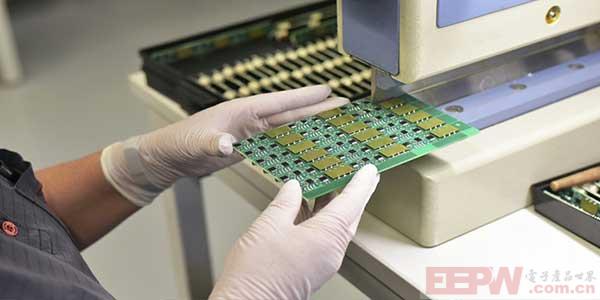
Strict control during PCB fabrication—such as etching precision and drilling accuracy—is essential to ensure reliable assembly.
4. Production Environment Control
Temperature and Humidity Management
Maintaining a stable production environment is vital:
- Temperature: 22 – 28°C
- Humidity: 40% – 60% RH
Improper conditions can negatively impact solder paste behavior:
- High temperature → reduced viscosity → paste slumping
- Low temperature → increased viscosity → poor printability
Humidity extremes may lead to:
- High humidity → electrostatic attraction of dust
- Low humidity → material brittleness
Electrostatic Discharge (ESD) Protection
Electrostatic discharge can damage sensitive SMT components, especially fine-pitch ICs.
Effective ESD control measures include:
- Anti-static flooring and workbench mats
- ESD wrist straps for operators
- Proper grounding of all equipment
Vibration and Dust Control
Mechanical vibration can compromise placement accuracy. Equipment should be installed on stable foundations to minimize disturbances.
Dust control is equally important:
- Use air filtration systems
- Perform regular cleaning of equipment and work areas
Contaminants on PCB or component surfaces can negatively affect both placement and soldering quality.
Conclusion
Improving SMT component placement accuracy is not achieved through a single factor but through the integration of:
- Equipment precision
- Process optimization
- Material quality control
- Environmental stability
By implementing these best practices, manufacturers can significantly enhance placement accuracy, reduce defects, and improve overall production efficiency and product reliability.